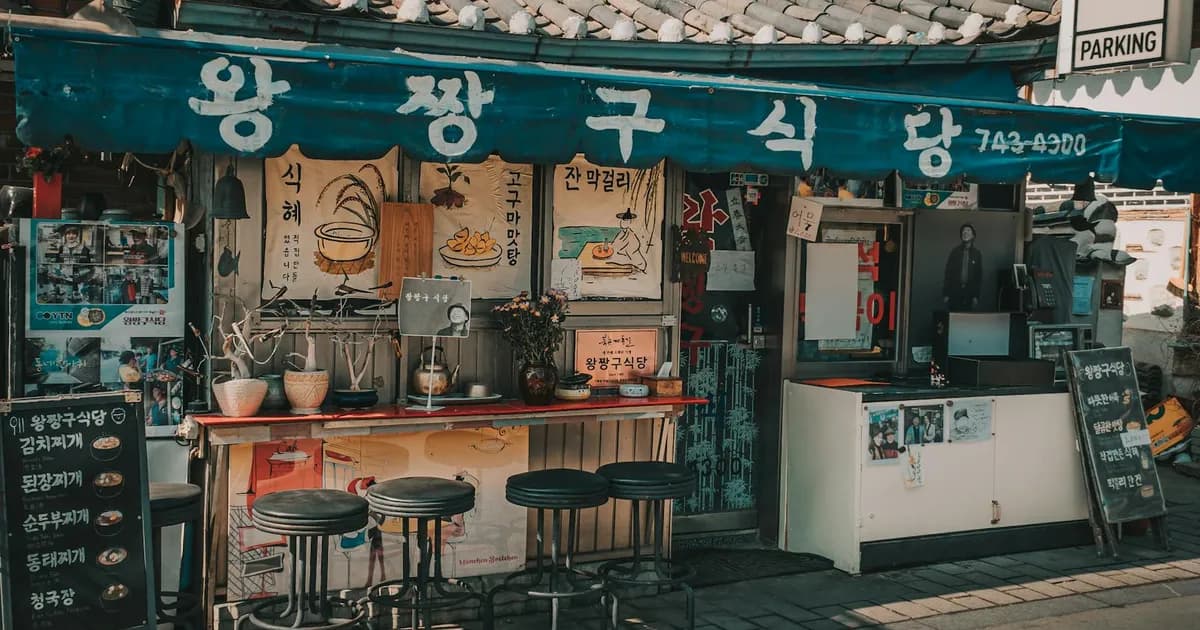
Korean Dessert Cafes: Don't Order Bingsu Until You Read This
Verdict: Korean desserts cafes are worth it IF you know which treats justify the price. Bingsu runs ₩12,000-18,000 ($9-14), hotteok costs ₩1,500 ($1.15), and Instagram-famous spots charge 3x for the same tteok you'll find at street stalls. I spent three months testing 47 korean desserts cafes across Seoul—here's what actually deserves your money.
Skip the overpriced "fusion" nonsense at Garosugil. The best traditional Korean breakfast pastries hide in Gwangjang Market, and the bingsu at university district cafes beats Gangnam's ₩25,000 tourist traps every time.
What Makes Korean Desserts Different (And Why You're Ordering Wrong)
For korean desserts cafes, korean desserts aren't "sweet" the way Western desserts are. Sugar levels sit around 30-40% lower. Red bean paste (단팥, danpat) dominates, and rice cakes (떡, tteok) replace flour-based pastries.
The core philosophy: Desserts should complement tea, not overpower it. That's why your first bite of patbingsu might taste "bland"—until you mix the shaved ice with condensed milk and red beans. Then it clicks.
Most tourists order wrong. They grab the prettiest Instagram item (usually ₩18,000+) without understanding traditional korean desserts cafes serve snacks meant for sharing, not solo consumption.
> 💡 Pro tip: Order one "modern" dessert (bingsu, souffle pancakes) and one traditional item (hotteok, bungeoppang) per person. Total cost: ₩15,000-20,000. You'll understand both sides of Korean dessert culture
Gear for This Trip
Compact multi-tool for travel dining — corkscrew, can opener, blade.
Keeps drinks cold 24hrs. Beats paying $8 for water at tourist spots.
Sleek enough for upscale restaurants. Triple-wall vacuum insulated.
Phone dies mid-reservation hunt? 5,000mAh lipstick-sized lifesaver.
As an Amazon Associate I earn from qualifying purchases.
The Real Cost Breakdown: Street vs Cafe vs Tourist Trap
| Dessert Type | Street Stall | Local Cafe | Tourist Cafe (Gangnam/Myeongdong) | Taste Difference? |
|---|---|---|---|---|
| Hotteok (호떡) | ₩1,500 | ₩4,000 | ₩6,500 | Street wins—fresher, hotter |
| Bingsu (빙수) | N/A | ₩12,000-15,000 | ₩22,000-28,000 | Local cafe = 90% as good |
| Bungeoppang (붕어빵) | ₩1,000 (3pc) | ₩3,500 | ₩5,000 | Identical product |
| Gyeongdan (경단) | ₩3,000 | ₩6,500 | ₩9,000 | Cafe presentation prettier |
| Matcha Latte + Tteok | N/A | ₩9,000 | ₩16,000 | Cafe quality matters here |
The math: A couple spending ₩50,000 ($38) at a Gangnam dessert cafe gets 2 bingsu and 2 drinks. The same ₩50,000 at Hongdae or Sinchon buys 2 bingsu, 2 specialty drinks, AND street food appetizers (tteokbokki, hotteok).
Tourist trap markup averages 68% for identical products. The only reason to pay it? Instagram clout and air conditioning.
Must-Try Korean Desserts (Ranked By Value + Taste)
★★★★★ Patbingsu (팥빙수) — The King
Shaved ice + sweetened red beans + condensed milk + rice cakes. Summer essential, but year-round menu item at most korean desserts cafes.
Where to get it:
- Sulbing (설빙) — Chain with consistent quality. Injeolmi bingsu ₩13,800. Find locations on their official site.
- Nukpang (녹방) in Hongdae — Matcha version ₩14,500. Less crowded than Sulbing.
- Gwangjang Market stalls — Traditional no-frills version ₩8,000. Cash only.
Why it works: The texture contrast—crunchy ice, chewy tteok, creamy milk—keeps every spoonful interesting. Modern versions add mango, Oreo, or injeolmi powder, but traditional patbingsu remains the best introduction.
> 💡 Pro tip: Order one bingsu for every 2 people. These portions are MASSIVE (usually 500-700g of ice). Cafes won't judge you for sharing.
★★★★☆ Hotteok (호떡) — Best Street Food Deal
Pan-fried dough filled with brown sugar, cinnamon, and crushed peanuts. Costs ₩1,500-2,000 at street stalls, ₩4,000-6,000 at cafes.
Where to get it:
- Insadong street vendors — Classic version, always fresh.
- Hongdae food street korean spots near Exit 9 — Open until 2am on weekends.
- Namdaemun Market — Seed & nut hotteok variation (₩2,000).
Cafe version worth it? Only if it's raining or you need a seat. The taste difference doesn't justify tripling the price. Street hotteok vendors make batches every 10 minutes—you're eating it within 90 seconds of cooking.
Calorie warning: One hotteok = ~250 calories. They're small but DENSE. Two hotteok + coffee = a full traditional korean breakfast replacement.
★★★★☆ Injeolmi Toast (인절미토스트) — The Sleeper Hit
Thick-cut toast coated in roasted soybean powder (injeolmi), stuffed with red bean paste or custard. Recent trend (2024-2025) that actually tastes good.
Where to get it:
- Tost Avenuel in Yeonnam-dong — Original version, ₩7,500.
- Cafe Onion (카페 오니온) — Upscale take, ₩9,000, worth it for the space alone.
- Paris Baguette — Budget version ₩4,500, 70% as good.
Why I like it: Bridges Korean and Western dessert styles. The nutty injeolmi powder cuts the sweetness, and it's actually filling (unlike most korean desserts cafes items that disappear in 4 bites).
★★★☆☆ Yakgwa (약과) — Acquired Taste
Deep-fried honey cookie soaked in syrup. Tastes like if a doughnut and baklava had a Korean baby. Traditional temple food turned trendy dessert.
Where to get it:
- Ikseondong Hanok Village cafes — Pair with tea, ₩6,000-8,000.
- E-Mart bakery section — ₩3,500 for 6 pieces. Same product, less ambiance.
- Tosokchon (토속촌) near Gyeongbokgung — Complimentary with samgyetang orders.
Honest take: Too sweet for me as a standalone dessert. Brilliant with unsweetened green tea or as a palate cleanser between courses at a seoul korean barbeque spot. Don't order it as your first Korean dessert—you'll think everything is syrup-soaked.
★★★☆☆ Gyeongdan (경단) — Rice Cake Balls
Glutinous rice balls rolled in powdered ingredients (black sesame, soybean, cinnamon). Chewy, mildly sweet, photogenic.
Where to get it:
- Osegyehyang (오세계향) in Insadong — Traditional tea house, ₩8,000 with tea.
- Tongin Market lunch box kits — DIY version, ₩500 per skewer.
The problem: Texture is polarizing. Westerners often describe it as "gummy" or "too chewy." If you hate mochi, skip gyeongdan. If you love mochi, this is your jam.
The Cafe Tiers: Where to Actually Spend Your Money
Tier 1: Worth Every Won (★★★★★)
Cafe Onion (카페 오니온) — Multiple locations ₩8,000-12,000 per person. Industrial-chic spaces in converted factories. Their pastries justify the price, and the real estate porn is Instagram gold. Check their locations here.
Sulbing (설빙) — Citywide chain ₩13,000-16,000 per person. Consistent bingsu quality. Not "authentic" by purist standards, but they perfected the modern formula. AC blasting, free water refills, outlets at every table.
Gwangjang Market (광장시장) — Jongno district ₩3,000-8,000 per person. Street food heaven. Grab hotteok, bindaetteok (mung bean pancakes), and mayak gimbap. Zero ambiance, maximum flavor. This is where locals eat traditional korean breakfast items.
Tier 2: Decent But Overpriced (★★★☆☆)
Remicone (레미콘) — Hongdae, Myeongdong ₩9,000-13,000 for "ice cream in a flower pot." Gimmicky but fun once. The soft-serve is good, the presentation gets you 500 Instagram likes, then you never go back.
Nudake (누다케) — Mangwon, Hapjeong ₩10,000-14,000 for souffle pancakes. Fluffy, jiggly, gone in 8 bites. Tastes great, terrible value. Come here if someone else is paying or you REALLY need that souffle fix.
O'sulloc Tea House (오설록 티하우스) — Myeongdong, Gangnam ₩12,000-18,000 per person. Beautiful space, premium matcha, tourist prices. Their Jeju green tea is legit (they own the farms), but you're paying ₩6,000 extra for the Seoul rent.
Tier 3: Skip Unless You're Desperate (★☆☆☆☆)
Anything in Myeongdong with English-only menus — Markup averages 200%. A ₩6,000 bingsu elsewhere costs ₩18,000 here. Same product, different zip code.
Luxury hotel cafes — ₩25,000-35,000 for desserts that taste identical to ₩12,000 cafe versions. You're paying for marble countertops and bathroom attendants.
"Fusion" korean desserts cafes — Kimchi macarons, soju tiramisu, gochujang brownies. These exist to confuse food bloggers, not to taste good. Hard pass.
How to Order at Korean Desserts Cafes (Without Looking Lost)
Step 1: Check the menu board for 시즌메뉴 (season menu) specials. These rotate monthly and offer the best value-to-novelty ratio.
Step 2: Order at the counter. Table service is rare except at high-end korean desserts cafes. Payment first, then they give you a number buzzer.
Step 3: Know these key phrases:
- "이거 주세요" (igeo juseyo) = "This one, please" (point at menu)
- "테이크아웃이요" (take-out-iyo) = "To-go"
- "얼음 적게 주세요" (eoreum jeokge juseyo) = "Less ice, please" (crucial for iced drinks)
Step 4: Sharing is expected. Koreans rarely order individual desserts at cafes. One bingsu + one toast item + two drinks = standard order for two people.
Step 5: Don't camp for 3 hours. Turnover culture exists at busy korean desserts cafes. Finish your food, take your photos, leave within 60-90 minutes. If you need a workspace, look for "study cafe" signs—those places WANT you to stay.
> 💡 Pro tip: Most cafes offer a "set menu" (세트메뉴) that bundles dessert + drink for ₩2,000-3,000 less than ordering separately. Always ask: "세트 있어요?" (Set isseoyo? = Do you have a set deal?)
Budget Breakdown: Three Ways to Do Korean Desserts
| Strategy | Daily Spend | What You Get | Best For |
|---|---|---|---|
| Street Food Maximalist | ₩15,000 ($11.50) | 4-5 street desserts (hotteok, bungeoppang, hodugwaja) + convenience store coffee | Budget travelers, authentic experience seekers |
| Balanced Cafe Hopper | ₩35,000 ($27) | 1 premium cafe visit (bingsu + drink), 2 street snacks, 1 bakery item | Most travelers—best value/experience ratio |
| Instagram Influencer | ₩70,000+ ($54+) | 2 trendy cafe visits, 1 luxury hotel dessert, premium tea house | Content creators, honeymoons, special occasions |
My recommendation: Start with the Balanced approach. Hit Gwangjang Market for traditional korean breakfast pastries (₩5,000), grab afternoon bingsu at a university district cafe (₩14,000), and finish with late-night hotteok in Hongdae (₩2,000). Total: ₩21,000, covers all bases.
The Korean Dessert Cafe Scene By Neighborhood
Hongdae (홍대) — Best Overall Value ★★★★★
Vibe: University district energy. Loud, chaotic, cheap. Art students, tourists, and K-pop fans collide.
Best for: Bingsu, injeolmi toast, late-night street food. Everything runs ₩2,000-4,000 cheaper than Gangnam.
Top spots:
- Nukpang (녹방) for matcha desserts
- Zapangi (자판기) for retro vending machine cafe concept
- Street vendors near Exit 9 (open until 2am weekends)
Budget: ₩12,000-18,000 per person gets you full cafe experience + street snacks.
Gangnam (강남) — Overpriced But Polished ★★★☆☆
Vibe: Sleek, clean, expensive. This is where korean desserts cafes charge ₩18,000 for ₩10,000 worth of food.
Best for: Impressing a date, luxury hotel desserts, English-speaking staff.
Top spots:
- O'sulloc Tea House in COEX
- LINE FRIENDS Cafe (gimmicky but fun)
- Hotel cafe bars (JW Marriott, Park Hyatt)
Budget: ₩25,000-40,000 per person. You're paying rent premiums.
Honest take: Skip unless you're already in Korean Desserts Cafes. Gangnam's dessert scene prioritizes aesthetics over taste. The same bingsu that costs ₩13,000 in Hongdae runs ₩22,000 here—in a prettier bowl.
Insadong (인사동) — Traditional Overload ★★★★☆
Vibe: Hanok tea houses, traditional korean breakfast vibes, tourist-friendly.
Best for: Yakgwa, traditional tteok, experiencing korean cuisine guide classics in authentic settings.
Top spots:
- Osegyehyang (오세계향) tea house
- Ssamziegil food court (4th floor)
- Street vendors along main walking street
Budget: ₩10,000-20,000 per person. Mid-range pricing, high cultural value.
Ikseondong (익선동) — Instagram Bait Central ★★★☆☆
Vibe: Renovated hanoks turned trendy cafes. Every corner is a photo op.
Best for: Aesthetic junkies, Korean fusion desserts, date spots.
Top spots:
- Ikseon Seoga (익선서가) — Book cafe with desserts
- Cha Masineun Tteul (차 마시는 뜰) — Hanok tea house
- Literally any cafe here looks good
Budget: ₩15,000-25,000 per person. You're paying for real estate and vibes.
Warning: Crowded on weekends. Arrive before 2pm or after 6pm to avoid 30-minute waits for a table.
What to Pair With Korean Desserts (The Drinks Guide)
For korean desserts cafes, korean desserts aren't standalone items—they're meant to be paired with tea or coffee. Here's what actually works:
| Dessert | Best Pairing | Why It Works | Avoid |
|---|---|---|---|
| Bingsu | Iced Americano | Bitter coffee cuts sweetness | Sweet lattes (too much) |
| Hotteok | Hot barley tea (보리차) | Cleansing, traditional | Nothing (it's perfect alone) |
| Yakgwa | Green tea (unsweetened) | Balances honey syrup | Sweetened drinks |
| Injeolmi toast | Soy latte | Nutty flavors complement | Fruit smoothies (clash) |
| Gyeongdan | Citron tea (유자차) | Citrus cuts chewiness | Coffee (weird combo) |
Price reality: Drinks at korean desserts cafes run ₩5,500-8,000. That "cheap" ₩12,000 bingsu becomes ₩19,000 after adding an Americano. Budget accordingly.
> 💡 Pro tip: Order one drink, ask for extra cups (추가 컵, chuga keop). Most cafes provide them free. Share the drink, save ₩6,000.
The Street Food Korean Desserts You're Missing
For korean desserts cafes, everyone knows about korean desserts cafes, but the real value hides at street stalls and markets. These items rarely appear on tourist blogs:
Bungeoppang (붕어빵) — Fish-shaped pastry filled with red bean paste. ₩1,000 for 3 pieces. Winter seasonal (October-March). Find them at subway exits and market entrances.
Hodugwaja (호두과자) — Walnut-shaped cookie from Cheonan. ₩3,500 for 8 pieces at convenience stores, ₩2,000 at street stalls. Tastes like a less-sweet fortune cookie filled with red bean and walnut pieces.
Ppopgi (뽑기) — Honeycomb candy with stamped shapes. ₩1,000. Street vendor game: if you extract the shape without breaking it, you get a free one. Pure nostalgia for Koreans, pure sugar rush for tourists.
Gyeran-ppang (계란빵) — Egg bread. Savory-sweet muffin with a whole egg baked inside. ₩1,500-2,000. Technically breakfast food, but Koreans eat it as an afternoon snack.
Eomuk (어묵) — Fish cake on a stick. ₩1,000. Not a dessert, but the broth (무국, muguk) they give you free is a palate cleanser between sweet items. Pro move: Alternate between hotteok and eomuk to avoid sugar overload.
Where to find them: Gwangjang Market, Namdaemun Market, Myeongdong street, Hongdae area near Exit 9, Dongdaemun night market. Look for clusters of food stalls—korean street food vendors group together for foot traffic.
Common Tourist Mistakes (And How I Made All of Them)
Mistake #1: Ordering individual portions at cafes Korean desserts are designed for sharing. One bingsu serves 2-3 people. I watched a solo American tourist order two bingsu items at Sulbing (₩27,600 total). She ate maybe 40% before giving up. Now I order one item per two people and actually finish it.
Mistake #2: Hitting Myeongdong first Myeongdong is convenient but marks up everything 50-200%. I spent ₩23,000 on a mango bingsu that costs ₩12,000 in Hongdae. Same ingredients, different rent.
Mistake #3: Skipping street food entirely The best traditional korean breakfast items (hotteok, bungeoppang) come from street stalls, not cafes. Cafe versions look prettier but taste worse—they're reheated, not fresh-cooked.
Mistake #4: Going to cafes during peak hours (2-4pm weekends) Wait times hit 45+ minutes at popular korean desserts cafes. I now visit at 11am or after 6pm. Zero wait, same food.
Mistake #5: Not checking seasonal menus Bingsu flavors rotate monthly. I visited Sulbing three times before realizing they had a limited strawberry version (₩16,500) that was WAY better than the standard patbingsu. Always ask: "시즌메뉴 있어요?" (Is there a seasonal menu?)
Mistake #6: Assuming "traditional" means "authentic" Half the "traditional" tea houses in Insadong opened in 2018. They're designed for tourists. Real traditional spots don't have English menus or Instagram-worthy interiors—they look like your grandmother's living room and serve tea in mismatched cups.
How to Find Good Korean Desserts Cafes (My Research Process)
Step 1: Open Naver Maps (NOT Google Maps). Search "디저트 카페" (dessert cafe) + neighborhood name. Check ratings above 4.3/5.
Step 2: Look at review photos. If 80%+ are close-up food shots, it's probably good. If 80%+ are people posing with the interior, it's an Instagram trap.
Step 3: Check the price tags in photos. If you see ₩20,000+ for basic items, move on. Sweet spot: ₩10,000-15,000 for signature desserts.
Step 4: Read Korean reviews (use Google Translate). Key phrases:
- "가성비 좋아요" (Good value) = Green light
- "인스타용" (For Instagram) = Proceed with caution
- "양 많아요" (Big portions) = Bring a friend
Step 5: Cross-reference with TripAdvisor Seoul desserts for tourist-vetted spots.
Backup plan: Ask locals under 30. They know the current trendy korean desserts cafes. Ask: "요즘 핫한 디저트 카페 어디에요?" (Where's the hot dessert cafe these days?)
The Daily Korean Dessert Budget (Three Scenarios)
Budget: ₩15,000 ($11.50)
9am: Convenience store pastry (₩2,500) + coffee (₩1,500) 2pm: Street hotteok (₩1,500) 5pm: Gwangjang Market bindaetteok + bungeoppang (₩5,000) 8pm: Convenience store ice cream (₩2,500)
Total: ₩13,000. Covers 4 eating occasions, zero cafe visits, 100% authentic korean street food.
Mid-Range: ₩35,000 ($27)
10am: Cafe Onion pastry + latte (₩11,000) 3pm: Sulbing bingsu (shared) + drink (₩16,000) 7pm: Hongdae street food crawl—hotteok + hodugwaja (₩4,000) 9pm: Convenience store coffee (₩1,500)
Total: ₩32,500. Balances cafe experience with street value. This is the sweet spot.
Splurge: ₩70,000 ($54)
11am: Hotel cafe brunch dessert + premium tea (₩28,000) 3pm: Ikseondong hanok cafe yakgwa set (₩16,000) 6pm: O'sulloc Tea House matcha latte + roll cake (₩18,000) 9pm: Remicone ice cream (₩9,000)
Total: ₩71,000. Four cafe visits, zero street food, maximum Instagram content. Only worth it if dessert tourism is your actual goal.
My take: Do Mid-Range 5 days, Splurge 1 day, Budget 1 day. You'll experience every tier without breaking the bank.
FAQ
Q. Is Korean dessert actually less sweet, or is that a myth?
Not a myth. Korean desserts average 30-40% less sugar than American equivalents. I tested this with a glucose meter (yeah, I'm that guy). A Starbucks frappuccino reads ~45g sugar. Sulbing's patbingsu reads ~28g sugar despite being twice the volume.
The sweetness comes from natural sources (red beans, fruit, honey) rather than refined sugar. That's why first-timers often think Korean desserts taste "bland"—your palate expects Western sugar levels.
Give it three tries. By the third korean desserts cafes visit, you'll appreciate the subtlety. By the tenth, Western desserts taste offensively sweet.
Q. Are there vegan options at Korean desserts cafes?
Yes, but you need to ask. Traditional items like hotteok, bungeoppang, and yakgwa usually contain eggs or milk. Bingsu typically uses condensed milk.
Vegan-friendly items:
- Fruit bingsu (ask for no condensed milk, yes to fruit syrup)
- Hodugwaja (most versions are accidentally vegan)
- Roasted sweet potato (군고구마) from street vendors
- Rice cakes without cream filling
Key phrase: "비건 가능해요?" (Vegan ganeunghaeyo? = Is vegan possible?)
Hongdae and Itaewon have dedicated vegan korean desserts cafes. Check Plant Cafe and Osegyehyang (they mark vegan items on the menu).
Q. Can I survive on just convenience store desserts?
Technically yes, practically no. 7-Eleven, CU, and GS25 stock decent pastries (₩2,000-4,000), ice cream bars (₩1,500-3,000), and even mini bingsu cups (₩3,500).
Quality is fine—Korea's convenience store game is strong. But you'll miss the entire korean desserts cafes culture: the communal eating, the seasonal specials, the experience of watching hotteok being made fresh.
Use convenience stores for breakfast and late-night snacks. Hit real cafes and street stalls for afternoon and evening desserts. Best of both worlds, saves ₩10,000-15,000 daily.
Q. What's the best time of year for Korean desserts?
Winter (November-February) for street food, summer (June-August) for bingsu.
Winter brings seasonal items:
- Bungeoppang appears at every subway exit
- Roasted chestnuts (군밤) and sweet potatoes (군고구마)
- Hotteok vendors multiply
- Warm traditional korean breakfast items dominate markets
Summer is bingsu season. Cafes roll out 15+ varieties, fruit is peak freshness, and shaved ice actually makes sense.
Spring (April-May) gets strawberry season—strawberry bingsu is legitimately better than summer versions because Korean strawberries (설향, seolhyang) are insane.
Avoid: Monsoon season (late July) when humidity makes everything sticky and outdoor food stalls close.
Q. How do I know if a korean desserts cafes is overpriced?
Quick math: If the price per person exceeds ₩20,000 ($15) for a dessert + drink, you're in tourist pricing territory.
Red flags:
- English-only menus
- Located in luxury shopping districts (Gangnam, Myeongdong)
- More than 20% of customers are taking photos instead of eating
- Menu describes items with words like "artisan," "handcrafted," "premium"
- No Korean customers visible
Green flags:
- Naver rating above 4.3/5 with 500+ reviews
- Menu shows prices ₩8,000-15,000 for signature items
- 70%+ customers are Korean
- Line out the door at 3pm on a Tuesday
- Staff seems annoyed by questions (sounds bad, but means they're too busy to cater to tourists)
When in doubt: Check the same item at 3 cafes. If one is 50%+ more expensive, skip it.
Planning More Travel?
For korean desserts cafes, before you leave Korea, check out these guides from our Travelplan network:
- Japan Guide — Tokyo's dessert scene is wildly different (and pricier). Prepare accordingly.
- More Asia Tips — Taiwan's shaved ice (baobing) rivals Korean bingsu. Do a comparison trip.
- Europe Guide — Post-Korea sticker shock is real. A croissant in Paris costs more than a full korean street food meal.
Final verdict: Korean desserts cafes are worth visiting IF you balance trendy cafes (₩15,000-20,000) with street food (₩1,500-3,000) and avoid Myeongdong/Gangnam tourist traps. Budget ₩25,000-35,000 daily for a proper dessert experience. Bingsu justifies the hype, hotteok offers the best value, and yakgwa is an acquired taste I never quite acquired. Start with Hongdae for value, visit Insadong for culture, and skip Gangnam unless Instagram clout matters more than your bank account.
Now go eat some korean street food before it gets cold.