Best Places to Eat in Seoul: 23 Spots I Can't Shut Up About
I atemy way through Seoul for three months straight and gained 4kg. Worth it.
Here are the 23 best places to eat in Seoul that I actually go back to—from hole-in-the-wall joints locals queue for at 2am to the fancy spots where I blow my monthly budget. No tourist traps, no Instagram-only cafes that serve mediocre food. Just places where the food makes you shut up and chew.
1. Gwangjang Market (광장시장) — Street Food Paradise ★★★★★
What: Korea's oldest daily market with the best concentration of street food stalls in Seoul.
📍 Related: 27 Busan Things To Do That'll Ruin Other Cities For You
Where: Jongno-gu, Exit 8 from Jongno 5-ga Station (Line 1)
Cost: ₩5,000-₩15,000 per person ($3.50-$11)
How long: 1-2 hours
This is where the best places to eat in Seoul start for me. Forget fancy restaurants—Gwangjang Market is where ajummas (Korean aunties) have been perfecting bindaetteok (mung bean pancakes) for 40 years.
Hit the mayak gimbap stalls first. "Mayak" means drug in Korean—they call it that because it's addictive. ₩3,000 for a plate of tiny rolls. Then move to the bindaetteok alley where every stall fries these massive pancakes to order. ₩5,000 each, crispy edges, soft center.
The yukhoe (raw beef) stalls are legit but skip them if you're squeamish. I'm not, so I ate it three times. ₩15,000 for a bowl of hand-cut beef with pear, egg yolk, and sesame oil.
💡 Pro tip: Go on weekdays before 1pm or after 8pm. Weekends are a tourist zoo. Bring cash—most stalls don't take cards. The official Seoul tourism site has a market map you can download.
Gear for This Trip
Compact multi-tool for travel dining — corkscrew, can opener, blade.
Keeps drinks cold 24hrs. Beats paying $8 for water at tourist spots.
Sleek enough for upscale restaurants. Triple-wall vacuum insulated.
Phone dies mid-reservation hunt? 5,000mAh lipstick-sized lifesaver.
As an Amazon Associate I earn from qualifying purchases.
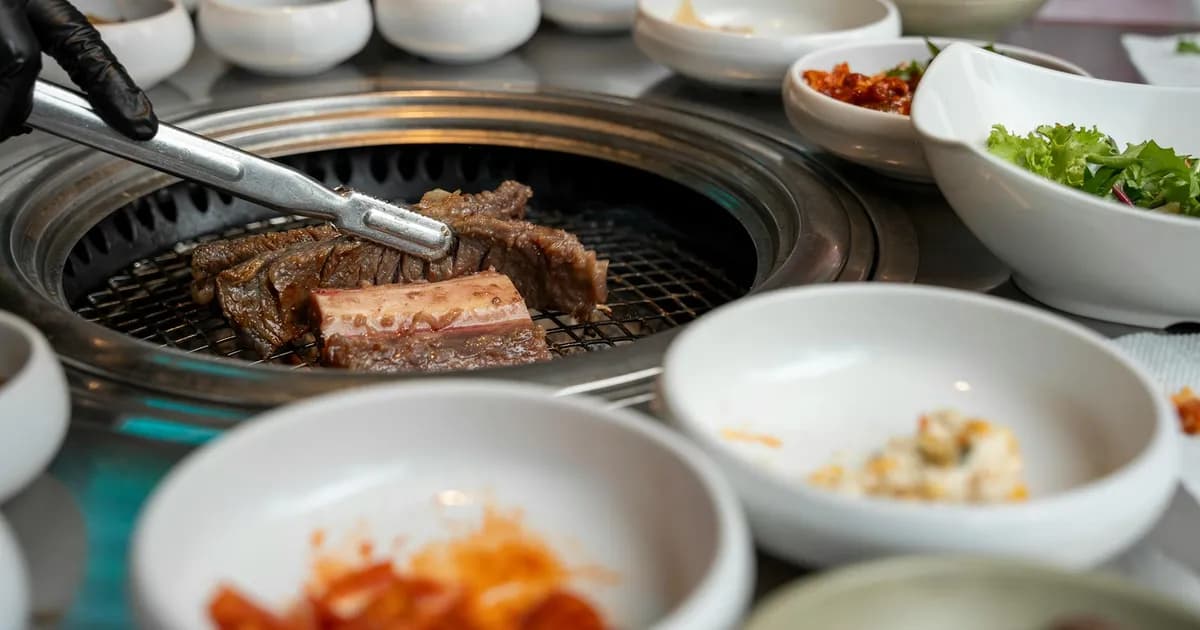
2. Maple Tree House (메이플트리하우스) — Seoul Korean BBQ Done Right ★★★★
What: Premium hanwoo (Korean beef) in a modern setting
📍 Related: 27 Seoul Attractions Free (I Spent $0 for 3 Days)
Where: Itaewon, 5-minute walk from Itaewon Station Exit 3
Cost: ₩40,000-₩80,000 per person ($28-$57)
How long: 1.5-2 hours
If you're looking for seoul korean bbq that justifies the hype, this is it. Maple Tree House uses certified hanwoo—the Korean answer to Wagyu—and the marbling is obscene.
Order the samhap (₩89,000 for 2 people): three cuts of beef including their signature striploin. The staff grills it for you, which sounds fancy but really means you won't fuck it up and waste $50 of meat.
The banchan (side dishes) here actually matter. The kimchi is house-fermented, not from a bucket. The doenjang jjigae (soybean paste stew) comes complimentary and has chunks of beef in it.
Is it touristy? Yes. Do locals still eat here? Also yes, because the quality is consistent and they speak English without the attitude you get at some traditional places.
💡 Pro tip: Reserve on Naver (Korea's everything app) or call ahead. Walk-ins wait 1-2 hours on weekends. They validate parking if you drive.
| Cut | Price (2 portions) | My Rating |
|---|---|---|
| Sirloin | ₩79,000 | ★★★★ |
| Striploin | ₩89,000 | ★★★★★ |
| Rib Eye | ₩95,000 | ★★★★ |
| Samhap Set | ₩89,000 | ★★★★★ |
3. Tosokchon Samgyetang (토속촌) — Hangover Ginseng Chicken Soup ★★★★
What: Whole chicken stuffed with rice and ginseng in milky broth
📍 Related: Best Area to Stay in Seoul: I Lived in All 7
Where: Jongno-gu, near Gyeongbokgung Palace
Cost: ₩18,000-₩20,000 per person ($13-$14)
How long: 45 minutes
Every expat in Seoul has the same story: they got drunk in Hongdae, stumbled here at 11am, and the samgyetang saved their life. I'm no different.
Best Places To Eat In Seoul has been serving samgyetang (ginseng chicken soup) since 1983. One menu item. You get a whole young chicken boiled until the meat falls off, stuffed with glutinous rice, jujube, garlic, and a fat ginseng root. The broth is white and rich—it tastes like someone liquefied comfort.
There's always a line. Always. Even at 3pm on a Tuesday. The line moves fast because everyone orders the same thing and inhales it.
💡 Pro tip: Add black pepper and salt to the broth—it's on the table. Don't skip the kimchi side—it cuts through the richness. After eating, walk 5 minutes to Gyeongbokgung Palace to walk off the food coma.
4. Mingles — Modern Korean That Earned The Michelin Stars ★★★★★
What: Two Michelin-starred fine dining, Korean ingredients with French technique
Where: Gangnam, Cheongdam area
Cost: ₩180,000-₩300,000 per person ($128-$214)
How long: 2.5-3 hours
Best places to eat in Seoul for a special occasion? Mingles is the answer. Chef Kang Min-goo trained in Europe and came back to Seoul to prove Korean food can hang with any cuisine.
The tasting menu (₩220,000 for lunch, ₩280,000 for dinner) changes seasonally but expect things like jang-fermented dishes (using Korean soy-based pastes), soy-glazed abalone, and their signature beef tartare with kimchi emulsion. It sounds weird. It works.
Service is impeccable without being stuffy. The sommelier actually listens when you say you don't like oaky wines. The pacing is perfect—you're never waiting or rushed.
Is it worth the money? If you eat out once a month and want to understand why people geek out over modern Korean cuisine, yes. If you're backpacking and eating convenience store gimbap, skip it and go to Gwangjang Market six times instead.
💡 Pro tip: Book 2-3 weeks ahead through their website. Lunch is ₩60,000 cheaper for basically the same experience. They accommodate dietary restrictions well—tell them when you book.
5. Myeongdong Kyoja (명동교자) — Mandu & Kalguksu Central ★★★★
What: Hand-cut noodles and dumplings since 1966
Where: Myeongdong, Exit 6 from Myeongdong Station (Line 4)
Cost: ₩9,000-₩13,000 per person ($6-$9)
How long: 30-45 minutes
Another Seoul institution with a line around the block. Myeongdong Kyoja does four things: kalguksu (knife-cut noodles), mandu (dumplings), bibim guksu (spicy cold noodles), and kongguksu (cold soy milk noodles in summer).
The kalguksu is what everyone orders. ₩9,000 for a huge bowl of chewy hand-cut noodles in anchovy-kelp broth with a mountain of dumplings. The broth tastes like the ocean but in a good way.
The mandu are stupid good—thin skins, juicy pork filling, pleated by hand every morning. ₩10,000 for 10 pieces. Order both the kalguksu and mandu to share. You'll be full for ₩19,000 total.
The kimchi is weapons-grade spicy. I love kimchi and even I needed water.
💡 Pro tip: Go at off-hours (3pm or 8:30pm) to avoid the worst lines. Don't go to the Myeongdong location if you're impatient—try the newer Gangnam branch which is less crowded but same food. Cash only at original location.
atemy way through Seoul for three months straight and gained 4kg. Worth it.Here are the 23 best places to eat in Seoul that I actually go back to—from hole-in-the-wall joints locals queue for at 2am to the fancy spots where I blow my monthly budget. No tourist traps, no Instagram-only cafes that serve mediocre food. Just places where the food makes you shut up and chew.
1. Gwangjang Market (광장시장) — Street Food Paradise ★★★★★
What: Korea's oldest daily market with the best concentration of street food stalls in Seoul.
📍 Related: 27 Busan Things To Do That'll Ruin Other Cities For You
Where: Jongno-gu, Exit 8 from Jongno 5-ga Station (Line 1)
Cost: ₩5,000-₩15,000 per person ($3.50-$11)
How long: 1-2 hours
This is where the best places to eat in Seoul start for me. Forget fancy restaurants—Gwangjang Market is where ajummas (Korean aunties) have been perfecting bindaetteok (mung bean pancakes) for 40 years.
Hit the mayak gimbap stalls first. "Mayak" means drug in Korean—they call it that because it's addictive. ₩3,000 for a plate of tiny rolls. Then move to the bindaetteok alley where every stall fries these massive pancakes to order. ₩5,000 each, crispy edges, soft center.
The yukhoe (raw beef) stalls are legit but skip them if you're squeamish. I'm not, so I ate it three times. ₩15,000 for a bowl of hand-cut beef with pear, egg yolk, and sesame oil.
💡 Pro tip: Go on weekdays before 1pm or after 8pm. Weekends are a tourist zoo. Bring cash—most stalls don't take cards. The official Seoul tourism site has a market map you can download.
2. Maple Tree House (메이플트리하우스) — Seoul Korean BBQ Done Right ★★★★
What: Premium hanwoo (Korean beef) in a modern setting
📍 Related: 27 Seoul Attractions Free (I Spent $0 for 3 Days)
Where: Itaewon, 5-minute walk from Itaewon Station Exit 3
Cost: ₩40,000-₩80,000 per person ($28-$57)
How long: 1.5-2 hours
If you're looking for seoul korean bbq that justifies the hype, this is it. Maple Tree House uses certified hanwoo—the Korean answer to Wagyu—and the marbling is obscene.
Order the samhap (₩89,000 for 2 people): three cuts of beef including their signature striploin. The staff grills it for you, which sounds fancy but really means you won't fuck it up and waste $50 of meat.
The banchan (side dishes) here actually matter. The kimchi is house-fermented, not from a bucket. The doenjang jjigae (soybean paste stew) comes complimentary and has chunks of beef in it.
Is it touristy? Yes. Do locals still eat here? Also yes, because the quality is consistent and they speak English without the attitude you get at some traditional places.
💡 Pro tip: Reserve on Naver (Korea's everything app) or call ahead. Walk-ins wait 1-2 hours on weekends. They validate parking if you drive.
| Cut | Price (2 portions) | My Rating |
|---|---|---|
| Sirloin | ₩79,000 | ★★★★ |
| Striploin | ₩89,000 | ★★★★★ |
| Rib Eye | ₩95,000 | ★★★★ |
| Samhap Set | ₩89,000 | ★★★★★ |
3. Tosokchon Samgyetang (토속촌) — Hangover Ginseng Chicken Soup ★★★★
What: Whole chicken stuffed with rice and ginseng in milky broth
📍 Related: Best Area to Stay in Seoul: I Lived in All 7
Where: Jongno-gu, near Gyeongbokgung Palace
Cost: ₩18,000-₩20,000 per person ($13-$14)
How long: 45 minutes
Every expat in Seoul has the same story: they got drunk in Hongdae, stumbled here at 11am, and the samgyetang saved their life. I'm no different.
Best Places To Eat In Seoul has been serving samgyetang (ginseng chicken soup) since 1983. One menu item. You get a whole young chicken boiled until the meat falls off, stuffed with glutinous rice, jujube, garlic, and a fat ginseng root. The broth is white and rich—it tastes like someone liquefied comfort.
There's always a line. Always. Even at 3pm on a Tuesday. The line moves fast because everyone orders the same thing and inhales it.
💡 Pro tip: Add black pepper and salt to the broth—it's on the table. Don't skip the kimchi side—it cuts through the richness. After eating, walk 5 minutes to Gyeongbokgung Palace to walk off the food coma.
4. Mingles — Modern Korean That Earned The Michelin Stars ★★★★★
What: Two Michelin-starred fine dining, Korean ingredients with French technique
Where: Gangnam, Cheongdam area
Cost: ₩180,000-₩300,000 per person ($128-$214)
How long: 2.5-3 hours
Best places to eat in Seoul for a special occasion? Mingles is the answer. Chef Kang Min-goo trained in Europe and came back to Seoul to prove Korean food can hang with any cuisine.
The tasting menu (₩220,000 for lunch, ₩280,000 for dinner) changes seasonally but expect things like jang-fermented dishes (using Korean soy-based pastes), soy-glazed abalone, and their signature beef tartare with kimchi emulsion. It sounds weird. It works.
Service is impeccable without being stuffy. The sommelier actually listens when you say you don't like oaky wines. The pacing is perfect—you're never waiting or rushed.
Is it worth the money? If you eat out once a month and want to understand why people geek out over modern Korean cuisine, yes. If you're backpacking and eating convenience store gimbap, skip it and go to Gwangjang Market six times instead.
💡 Pro tip: Book 2-3 weeks ahead through their website. Lunch is ₩60,000 cheaper for basically the same experience. They accommodate dietary restrictions well—tell them when you book.
5. Myeongdong Kyoja (명동교자) — Mandu & Kalguksu Central ★★★★
What: Hand-cut noodles and dumplings since 1966
Where: Myeongdong, Exit 6 from Myeongdong Station (Line 4)
Cost: ₩9,000-₩13,000 per person ($6-$9)
How long: 30-45 minutes
Another Seoul institution with a line around the block. Myeongdong Kyoja does four things: kalguksu (knife-cut noodles), mandu (dumplings), bibim guksu (spicy cold noodles), and kongguksu (cold soy milk noodles in summer).
The kalguksu is what everyone orders. ₩9,000 for a huge bowl of chewy hand-cut noodles in anchovy-kelp broth with a mountain of dumplings. The broth tastes like the ocean but in a good way.
The mandu are stupid good—thin skins, juicy pork filling, pleated by hand every morning. ₩10,000 for 10 pieces. Order both the kalguksu and mandu to share. You'll be full for ₩19,000 total.
The kimchi is weapons-grade spicy. I love kimchi and even I needed water.
💡 Pro tip: Go at off-hours (3pm or 8:30pm) to avoid the worst lines. Don't go to the Myeongdong location if you're impatient—try the newer Gangnam branch which is less crowded but same food. Cash only at original location.
6. Noryangjin Fish Market (노량진수산시장) — Fresh Seafood at 5am ★★★★
What: Korea's biggest fish market with restaurants that cook your purchase
Where: Dongjak-gu, Exit 1 from Noryangjin Station (Line 1)
Cost: ₩30,000-₩80,000 per person ($21-$57)
How long: 2-3 hours
The best places to eat in seoul for seafood hunters. Noryangjin is where Seoul's restaurants buy their fish at 3am. You can too, then take it upstairs where restaurants will prepare it for a ₩5,000-₩10,000 fee per dish.
How it works: Walk the market. Point at live fish. They weigh it, you pay. They bag it. You go upstairs to any restaurant (they're all similar), and they'll make it into sashimi, grilled fish, spicy stew, whatever you want.
A live flatfish (광어) costs ₩40,000-₩60,000 depending on size. That becomes sashimi for the table, then they take the bones and make maeuntang (spicy fish stew) for free. Two people eat like kings for ₩70,000 total.
The weirdest part? Everything is alive and trying to escape. Octopus crawling out of baskets. Crabs staging prison breaks. It's chaos.
💡 Pro tip: Bring a Korean speaker or use Papago translate app—most vendors don't speak English. Go early (6-7am) for best selection and to avoid crowds. The Noryangjin Market official site has pricing guides. Wear shoes you can wash—the floors are wet and fishy.
7. Jungsik — The Other Two-Michelin-Star Show-Off ★★★★
What: New Korean cuisine, modern presentation
Where: Gangnam, near Cheongdam Station
Cost: ₩180,000-₩320,000 per person ($128-$228)
How long: 2.5-3 hours
Jungsik is Mingles' main competitor for Seoul's fine dining crown. Chef Jungsik Yim also trained abroad (New York) and does the whole "Korean soul, global technique" thing.
The signature dish is octopus with yuzu and gochugaru oil. They also do an insane version of bibimbap deconstructed into like 12 components. It's delicious but also the kind of food where you're like "am I supposed to mix this or eat it in order?"
Jungsik feels more formal than Mingles. The dining room is darker, the plating is more architectural, the service is more traditional. If Mingles is Korean fine dining with a smile, Jungsik is Korean fine dining with a bow.
Both are excellent. I prefer Mingles because the vibe is less "I hope I'm using the right fork" and more "let's geek out about fermentation together." But some people prefer Jungsikfor exactly that formality.
💡 Pro tip: They have a lunch course (₩90,000) that's one of Seoul's best fine dining deals. Book on their website minimum 2 weeks ahead for dinner, 1 week for lunch. Dress nicely—not required but you'll feel weird in shorts.
| Restaurant | Michelin Stars | Lunch Price | Dinner Price | Vibe |
|---|---|---|---|---|
| Mingles | ★★ | ₩220,000 | ₩280,000 | Modern, relaxed |
| Jungsik | ★★ | ₩90,000-140,000 | ₩320,000 | Formal, architectural |
| Gaon | ★★★ | ₩180,000 | ₩350,000 | Traditional, ceremonial |
8. Bukchon Son Mandu (북촌손만두) — Handmade Dumplings Worth The Detour ★★★★
What: Tiny shop making fresh mandu all day
Where: Bukchon Hanok Village, Anguk Station area
Cost: ₩8,000-₩12,000 per person ($5.50-$8.50)
How long: 30 minutes
Hidden in the touristy hanok village area is this dumpling shop that locals line up for. They make mandu by hand from 9am until they sell out (usually by 7pm).
Two options: steamed (jjin mandu) or fried (gun mandu). Get both. ₩8,000 for steamed, ₩10,000 for fried. The skins are thick and chewy, the filling is 70% meat and 30% vegetables, and they're big—eight dumplings is a full meal.
The fried ones are what I dream about. Crispy bottom, juicy interior, dipped in soy-vinegar sauce with a hit of gochugaru (red pepper flakes).
The space has maybe 15 seats. You'll probably wait 10-20 minutes for a table, then another 10 minutes for your order because they make everything fresh.
💡 Pro tip: Combine this with a Bukchon Hanok Village walk—eat here first for fuel. They close Tuesdays. Cash only. The location is tricky to find—use Naver Maps (way better than Google Maps in Korea), not Google.
9. Gaon — Three Michelin Stars, All The Ceremony ★★★★★
What: The most decorated Korean restaurant in Seoul
Where: Gangnam, near Cheongdam Station
Cost: ₩350,000-₩450,000 per person ($250-$320)
How long: 3-4 hours
If you're committed to eating at one of the best places to eat in Seoul and cost isn't an issue, Gaon is Korea's only three-Michelin-star restaurant. It's temple food meets royal court cuisine with ingredients most chefs never touch.
Expect things like pine needle-flavored beef, 100-year-old ganjang (soy sauce) drizzled over sea bream, and desserts made with persimmons dried for six months. Each dish has a story about regional Korean cuisine or traditional preparation methods.
The experience is as Korean as it gets. You sit on floor cushions (they have chair seating too), courses arrive on traditional ceramics, and the staff explains everything in detail. It's more cultural education than dinner.
Is it worth $300? That's on you. The food is exceptional and you'll never eat anything like it anywhere else. But if you don't care about the ceremony and just want delicious Korean food, Mingles or even Gwangjang Market will make you happier per dollar.
💡 Pro tip: Book 4-6 weeks ahead. This is where Korean business people take important clients, so it books up. Tell them about any dietary restrictions when you reserve—they'll adjust the entire menu. Wear something nice. They're very accommodating but it's that kind of place.
10. Hanilkwan (한일관) — Old School Seoul Korean Restaurant ★★★★
What: Traditional Korean restaurant since 1939
Where: Multiple locations; Gangnam branch near Yeoksam Station is easiest
Cost: ₩15,000-₩40,000 per person ($11-$29)
How long: 1-1.5 hours
Some restaurants survive 80+ years because of location and nostalgia. Hanilkwan survives because the food is actually good and the banchan selection is ridiculous.
Order the bulgogi or galbi (₩28,000-₩38,000 per portion). Yes, it's more expensive than random BBQ places. Yes, it's worth it—the meat quality is consistent and the marinade is slightly sweet without being cloying.
The real move here is the lunch menu (₩15,000-₩20,000) which gets you a protein, rice, soup, and 20+ types of banchan. The banchan keeps coming until you say stop. I've never said stop.
Hanilkwan is where Korean families take grandma for her birthday. That tells you the vibe—traditional, not trendy, solid.
💡 Pro tip: The Apgujeong branch is the original but it's in a weird location. Go to the Gangnam or Yeoksam branch. They validate parking. If you don't read Korean, their lunch menu has pictures—point and eat.
11. Gwangjang Market — Yes, Again (Because It's That Good) ★★★★★
For best places to eat in seoul, i'm listing Gwangjang twice because I need to talk about the tteokbokki and sundae stalls specifically.
The tteokbokki (spicy rice cakes) at Gwangjang is different from street cart tteokbokki. The sauce is thicker, less sweet, more gochugaru-forward. ₩3,000-₩5,000 per portion. Some stalls add instant ramen, boiled eggs, and fish cakes for ₩7,000.
The sundae (blood sausage) stalls are an acquired taste but I'm telling you to acquire it. Sundae is chewy pig intestines stuffed with noodles, rice, and congealed pig blood. Sounds horrible. Tastes like savory heaven, especially with the salt-black pepper-sesame oil dip. ₩5,000 per plate.
My personal Gwangjang order: mayak gimbap (₩3,000), bindaetteok (₩5,000), tteokbokki with ramen (₩7,000), and one bottle of makgeolli (rice wine, ₩3,000). Total damage: ₩18,000 ($13) and I'm comatose.
💡 Pro tip: Download Naver Pay or KakaoPay if you're staying in Korea a while—some stalls give small discounts for mobile payment. Sit at stalls with older ladies who ignore you at first—that's how you know it's authentic. Aggressive hospitality means it's for tourists.
12. Jangchung Dong Jokbal Alley (장충동족발골목) — Braised Pig Trotters District ★★★★
What: Street famous for jokbal (braised pig's feet)
Where: Jung-gu, near Dongdaemun Stadium
Cost: ₩25,000-₩40,000 per person ($18-$29)
How long: 1-1.5 hours
This whole alley specializes in jokbal—pig's feet braised until the skin is gelatinous and the meat falls off the bone. It's rich, fatty, and you eat it wrapped in lettuce with ssamjang (spicy paste), garlic, and peppers.
Every restaurant claims to be the original or the best. I've tried five. They're all basically the same level of good. Just pick one that looks busy.
Order the basic jokbal (₩35,000-₩45,000 serves 2-3 people) plus the bossam set if you're hungry—it adds boiled pork belly to the order. They bring out 15+ types of banchan and more lettuce than you can possibly use.
The texture is... unique. If you don't like gelatinous food, skip this. If you're open-minded, it's incredibly flavorful and way less heavy than pork belly.
💡 Pro tip: This is late-night food—go after 9pm when it's busiest. Order soju with it (₩4,000 per bottle). Most places are open until 3-4am. Great post-bar food. The nearest station is Dongdaemuk History & Culture Park Station (Line 2/4/5).
13. Imun Seolnongtang (이문설농탕) — Ox Bone Soup For The Soul ★★★★
What: Milky white ox bone soup, slowly simmered
Where: Jongno-gu, multiple locations
Cost: ₩12,000-₩15,000 per person ($8.50-$11)
How long: 30-45 minutes
Seolnongtang is ox bone broth boiled for 12-18 hours until it's white and cloudy. It's bland on purpose—you add salt, pepper, and chopped green onions to taste at the table.
Imun Seolnongtang has been making the same soup since 1907. The broth is consistent every single time: rich, beefy, with chunks of ox meat, noodles, and rice.
Is it exciting? No. Is it comforting as hell at midnight after drinking too much soju? Yes. This is Korean comfort food in its purest form.
The location near Gyeongbokgung is 24/7, which is why I've eaten here at 4am more times than I care to admit. Open 24/7, always busy, always good.
💡 Pro tip: Add extra kimchi (it's free, unlimited) and mix it into the soup. Don't skip the kkakdugi (cubed radish kimchi)—the crunch cuts the richness. If you're hungover, order a bowl, add black pepper until it's gray, inhale it. You'll feel human again.
14. Noryangjin Fish Market Sashimi Restaurants (노량진 횟집) — Upstairs from The Market ★★★★
For best places to eat in seoul, i mentioned Noryangjin earlier but the restaurants deserve their own entry. These second-floor spots take your market purchases and turn them into meals.
The standard prep is half sashimi (hoe), half maeuntang (spicy stew). The sashimi is so fresh it's almost moving. The stew is spicy, packed with vegetables, and perfect for soaking up soju.
The restaurants all charge similar fees: ₩5,000 per dish. So if you buy ₩60,000 of fish and want sashimi + stew, that's ₩10,000 extra. Still cheaper than any sashimi restaurant in Seoul.
They'll also grill your fish, make it into tempura, or do raw crab (gejang) which is... intense. Raw crab marinated in soy sauce. It's a delicacy. I find it too fishy but Koreans go nuts for it.
💡 Pro tip: Bring a group—you need 3-4 people to justify buying a whole fish. Solo travelers, just eat at one of the market's food stalls instead. Thursday mornings have the best selection because that's when the fishing boats come in. Prices are on TripAdvisor's Noryangjin page.
15. Sinpo Samgyeopsal Golmok (신포삼겹살골목) — Pork Belly Alley ★★★★
What: Side street dedicated to samgyeopsal (pork belly BBQ)
Where: Gangnam, near Sinsa Station
Cost: ₩15,000-₩25,000 per person ($11-$18)
How long: 1.5-2 hours
Seoul korean bbq doesn't have to cost ₩80,000. This alley proves it. Dozens of samgyeopsal restaurants competing for your business means aggressive pricing and good quality.
The drill: thick-cut pork belly grilled over charcoal, wrapped in lettuce with garlic, ssamjang, kimchi, and whatever else you can fit. ₩15,000-₩18,000 for unlimited samgyeopsal at most places.
My go-to is Palsaik Samgyeopsal (팔색삼겹살) which serves eight different flavors of pork belly: plain, wine-marinated, ginseng, curry, etc. ₩16,000 per person for unlimited. Is it gimmicky? Absolutely. Is it fun and delicious? Also yes.
The whole alley smells like charcoal and pork fat. Follow your nose.
💡 Pro tip: Go to newer places—their ventilation is better and you won't leave smelling like a BBQ pit. Most spots include doenjang jjigae, rice, and unlimited banchan. Vegetarians, you're screwed here. Nearest option is a convenience store.
16. Line Friends Café — Skip It, Actually ★★
What: Themed café with cartoon character Brown
Where: Gangnam, Garosu-gil
Cost: ₩8,000-₩12,000 per person ($6-$9)
How long: 45 minutes (plus 30 minute wait to get in)
I'm including this to tell you to skip it unless you're obsessed with Line Friends. The food and drinks are mediocre. You're paying for the Instagram moment and to see oversized plush characters.
The coffee is ₩7,000 and tastes like ₩2,000 coffee. The desserts are cute but dry. The whole place exists for photos.
If you have kids who love Brown or Sally, fine, go. If you're looking for good food or coffee, there are 50 better cafés within 10 minutes.
💡 Pro tip: If you must go, go on weekday mornings (10-11am) to avoid lines. Don't waste time on the merchandise store—the same stuff is available online for less. Better cafés nearby: Cafe Onion (industrial vibes, great bread), Fritz Coffee Company (serious coffee nerds), Anthracite (roastery with multiple locations).
17. Jaha Son Mandu (자하손만두) — Kimchi Mandu Heaven ★★★★
What: Famous for kimchi mandu (kimchi dumplings)
Where: Seodaemun-gu, near Gyeongbokgung Palace
Cost: ₩7,000-₩12,000 per person ($5-$8.50)
How long: 30-45 minutes
This seoul korean restaurant has been making kimchi dumplings since 1974. They're different from regular mandu—the filling is mostly kimchi with pork, so they're tangy and spicy.
Two types: steamed (jjin mandu) and soup (mandu guk). The soup version (₩9,000) is their signature—big dumplings floating in clear beef broth with sliced rice cakes and egg. Perfect winter food.
The restaurant is tiny, maybe 10 tables. You'll wait during lunch and dinner rushes. It moves fast though—everyone orders the same thing.
The kimchi mandu are juicy. When you bite in, hot kimchi juice squirts out. That's the good stuff. That's also how you burn your tongue.
💡 Pro tip: Order the steamed kimchi mandu (₩8,000) and mandu guk (₩9,000) to share between two people. You get both textures. Go right when they open (11am) or at 3pm to avoid the worst crowds. The palace is 10 minutes away—good combination.
| Mandu Spot | Specialty | Price | Best For |
|---|---|---|---|
| Bukchon Son Mandu | Classic pork | ₩8,000-10,000 | Traditional, meat lovers |
| Jaha Son Mandu | Kimchi mandu | ₩7,000-9,000 | Tangy, spicy kick |
| Myeongdong Kyoja | Soup dumplings | ₩9,000-10,000 | Hearty, filling |
| Gwangjang Market | Fried mandu | ₩5,000-7,000 | Cheap, fast |
18. Balwoo Gongyang (발우공양) — Buddhist Temple Food ★★★★
What: Michelin one-star temple cuisine, no meat or alliums
Where: Jongno-gu, near Anguk Station
Cost: ₩50,000-₩100,000 per person ($36-$71)
How long: 1.5-2 hours
Vegetarians, this is your spot. Balwoo Gongyang serves temple food (사찰음식)—what Buddhist monks eat. No meat, no garlic, no onions, no MSG. Just vegetables, tofu, mushrooms, and fermented sauces.
The lunch course (₩50,000) includes 8-10 small dishes: sesame tofu, lotus root stir-fry, pine nut porridge, seasoned vegetables, kimchi made without seafood, rice, and soup. Everything is subtle and focuses on the ingredient's natural flavor.
It sounds boring. It's not. The chef makes you taste vegetables in ways you didn't know were possible. The soy sauce is aged for years. The kimchi uses mushroom stock instead of anchovy.
It's meditative and calm. No loud music, no TVs, no screaming children. Just quiet eating and a great view of Changdeokgung Palace grounds.
💡 Pro tip: Reserve on their website at least 3-5 days ahead. This is one of the best places to eat in Seoul for vegetarians traveling with meat-eating friends—the food is good enough that carnivores won't feel deprived. Lunch is half the price of dinner for similar quality.
19. Jungsik Dang (정식당) — Wait, Different From Jungsik ★★★★
What: Modern Korean in Gangnam (not the same as Jungsik in #7)
Where: Gangnam, Dosan-daero area
Cost: ₩150,000-₩280,000 per person ($107-$200)
How long: 2-2.5 hours
Confusingly, Best Places To Eat In Seoul is run by the same chef as Jungsik but it's a different concept. Jungsik Dang is more casual, focuses on grilled dishes and seasonal ingredients, and costs less.
They're famous for their aged beef and grilled seafood. The lunch sets start at ₩98,000 which is steep but includes multiple courses. The aging room is visible from the dining area—you can see the beef hanging.
I prefer Jungsik Dang over the main Jungsik because the food feels less formal and more fun. You're eating fancy food but you're not worried about which fork to use.
💡 Pro tip: Book through Naver booking. Go for lunch to save ₩80,000+ and get basically the same experience. They do Korean-style prix fixe—lots of small courses, not giant American portions.
💡 Related: Tokyo on $50/Day: I Tracked Every Yen for a Week, not the basic bibimbap—it's ₩2,000 more but uses raw beef and better ingredients. Mix in all the gochujang unless you're a spice wimp. The stone bowl stays hot for 20+ minutes so pace yourself. They have locations near most major tourist areas